Buy a Home in Houston or Austin, TX

Your Texas Home 

Journey Starts Here 

Buying a home is one of life's biggest decisions—but you don't have to navigate it alone.

Whether you're buying your first home, relocating to Texas, upgrading, downsizing, or purchasing an investment property, Real Haven Realty is here to guide you through every step of the journey.

Our experienced REALTORS® combine local market expertise, personalized guidance, and proven strategies to help you find the right home, negotiate with confidence, and make informed decisions from your first showing to closing day.

START YOUR HOME SEARCH HERE

SCHEDULE A BUYER CONSULTATION

Why Buy with Real Haven Realty?

Instead of simply opening doors, we help you make smart real estate decisions.

Our buyers receive:

  • Local market expertise in Houston and Austin
  • Personalized home search tailored to your goals
  • Neighborhood guidance and community insights
  • Skilled offer and contract negotiations
  • New construction representation
  • Trusted lender and vendor recommendations
  • Guidance through inspections and closing
  • A dedicated advocate from start to finish

The Real Haven Realty Home Buying Roadmap

Step 1

Buyer Consultation

Let's talk about your goals, timeline, budget, and what you're looking for in your next home.

Step 2

Mortgage Pre-Approval

We'll connect you with trusted lenders and help you understand your buying power before you begin shopping.

Step 3

Home Search

We'll customize your search based on your lifestyle, priorities, school preferences, commute, and budget.

Step 4

Tour Homes

View homes confidently while receiving honest guidance on value, condition, resale potential, and neighborhood trends.

Step 5

Make an Offer

We'll prepare a competitive offer designed to protect your interests while positioning you for success.

Step 6

Negotiation

We'll negotiate price, repairs, contingencies, and contract terms on your behalf.

Step 7

Inspection & Appraisal

We'll help you understand inspection reports and guide you through repairs, appraisal issues, and next steps.

Step 8

Final Walkthrough

Before closing, we'll ensure your new home is in the expected condition.

Step 9

Closing Day

Sign the paperwork, receive your keys, and celebrate your new home!

The Real Haven Difference

Educate First. Guide Always.

We believe informed buyers make better decisions. That's why we don't pressure you into a purchase or rush the process. We take the time to answer your questions, explain every step, and provide the insights you need to feel confident in your investment. Our goal isn't just to help you buy a house—it's to help you find a place you'll be proud to call home.

Home Buying Resources:

What is a Buyer's Agent?

What do Real Haven Realty REALTOR®s Do for Home Buyers? A REALTOR® does not simply help buyers in finding suitable properties, negotiating prices, and handling paperwork. They are there to guide buyers, offering expert advice and assistance at every stage – from the initial meeting to the final closing. At Real Haven Realty, we turn home visits into an art form, shedding light on the unique features and potential challenges of each property. This makes it easier for you to visualize your future home. When it comes to making an offer, we act as your negotiation expert, ensuring you get the best deal with meticulous attention to detail every step of the way.  Furthermore, we always aim to provide support to our Buyers throughout their Emotional Journey. Real Haven can also assist in navigating the mortgage process, providing straightforward guidance and personalized support for pre-approval and connecting you with reliable lenders. Our assistance goes beyond the purchase, advocating for you during inspections, ancillary services, and staying with you until you receive the keys – and even after. Expect ongoing advice and support as you settle in. At Real Haven Realty, we are more than just transaction facilitators; we strive to form lasting bonds and are committed to making your home-buying journey joyful and as stress-free as possible. For a full list of everything we do to help in the process check out Our Buyer Agency Standards of Excellence. Download Your Free Homebuyer's Guide
Read More

Buyer Representation Standards of Excellence

Buyer Representation Standards of Excellence Real Haven Realty provides comprehensive buyer assistance for a seamless home-buying experience. From the moment we first meet a potential Buyer client, we are ready to serve, starting with:  The Pre-Search Process Scheduling a time to meet Buyers (either in person, or via a video or phone conference) Preparing Buyers Guide & Presentation Meeting with Buyers and discussing their objectives and expectations – which includes: Explaining Buyer & Seller Agency Relationships and the Texas Real Estate Commission Information About Brokerage Services form Discussing different types of financing options Providing information regarding trusted Mortgage Lenders Explaining importance of obtaining a Lender Pre-Approval Letter Providing an overview of current market conditions Explaining our Value to our clients Educating Buyers about local neighborhoods Discussing the Buyer’s criteria for their next home Explaining how school districts effect on home values Explaining about recording devices during showings and Providing a comprehensive overview of the home buying process, including: Reviewing a purchase contract and the typical points of negotiation and key sections such as: Title Policy Earnest Money & Option Fee requirements Option Period The importance of Surveys & Shortages in Area coverage Home Warranty Policy Non-Realty Items Objections Homeowners Associations Utility Districts Sellers Disclosures Preferred closing timeframe Concessions/Repairs Addendums Home inspection process   Typical closing costs and how they are paid Once we are back in the office, it’s time to get busy! Just a few of the tasks we perform for our buyers include: The Search Process  Setting up the Buyer(s) in our documentation management system Sending out the Buyer Representation Agreement and associated documents for the Buyer’s signature Acquiring a copy of the Buyer’s pre-qualification letter from the lender Setting up the Buyer’s Concierge Search using their specific criteria Reviewing and approving specific properties that meet the Buyer’s criteria for their review Following up with the Buyer’s to ensure the approved properties truly meet their criteria, and adjusting the search if necessary Scheduling showings based on the Buyer’s preferred properties, including: Gather showing instructions for each listing Send showing schedule to Buyers Follow-up with listing agents with any questions During showings, we: Look for & highlight possible issues with the property Highlight features that meet the Buyer’s stated criteria Gather Buyer feedback Create a floor plan map (if one doesn’t exist) for properties where the client has shown strong interest After showings, we: Provide feedback to the listing agents Keep records of all showings Follow-up with Buyers on any properties they particularly liked to see if they are ready to make an offer Regularly update Buyers when new listings hit the market Share knowledge & insight about homes (including sellers disclosure notes, HOA and Condo Assn. fees, flood plains, etc.), neighborhoods, schools and other community features Once our client has identified a home, or homes, they are thinking of purchasing, we perform a Comparative Market Analysis on the properties to help determine a competitive offer price.  Now that our buyer(s) have selected a process, It’s time to make an offer! Once again, we ensure each step Is fully explained and handled with a focus on details, including: The Offer Process  Discussing & determining the offer amount, which is based on: Comparative Market Analysis data Property inclusions & exclusions What the seller will pay for (title policy, survey, HOA transfer & certification fees, home warranty policy, etc.) Whether it is a multi-offer situation Amount of concessions needed (for down-payment assistance, commission coverage, etc.) Other factors. Preparing sales contract & associated addenda and disclosures Updating Buyer’s Pre-Approval Letter (if needed) Discussing loan objection deadlines Choosing a closing date V erifying listing data is correct Preparing contract for Buyers’ signatures S ending signed contract and associated documents to Listing Agent Following-up with Listing Agent and facilitating negotiation and resolution of objections Making any necessary changes and resubmitting documents to Listing Agent for Seller’s signatures Executing Sales Contract & Disclosures  Once we have an accepted offer, there are more tasks to handle, and in this, Time is of the Essence, so It’s Important to note key dates on both the Realtor and Buyer calendar. The Contract Process Option Period (between 5-10 days): Send Executed Contract to the Title/Escrow Company & Lender (cc: Buyer) Coordinate payment of Earnest Money & Option Fee (within 3 days)  Get & save Receipted copy of Contract Obtain copy of Sellers Disclosure for Buyers (if not already obtained) Obtain a copy of HOA Bylaws  Coordinate Inspections with Buyers Meet Inspector at Property  Review Home Inspection with Buyers Negotiate Inspection Objections Get all agreed upon repair items and concessions in writing Execute Amendment for Repairs/Concessions (alternately, we may Extend Option Period or Terminate Contract by 5pm on the last day of the Option Period) Pending Period (between 25-45 days): Verify any existing Lease Agreements  Check in with Lender to verify Loan status Explain property Appraisal process Check on the Appraisal date Negotiate any unsatisfactory Appraisal results Explain Home Warranty options & ensure Buyer’s inform Title of their choice  Discuss transferable warranties Estimate expected utility usage costs Confirm water source and status  Coordinate closing times & location Make sure all documents are fully signed Verify Title company has everything needed  Remind Buyers to schedule utilities Ensure Buyers have Binder for homeowners Insurance Make sure all parties are notified of Closing time Closing Period (3-5 days prior to Closing and Closing day): Receive and review closing documents (no less than 3 days before Close) Confirm repairs have been made by Sellers Perform final walk-through with Buyers Resolve any last minute issues Attend Closing with Buyers Give keys and accessories to Buyers and CELEBRATE!
Read More

What is a Home Buyer Inspection?

Why a Home Inspection Matters When Buying a Home in Houston & Austin In Texas, a home inspection is a critical step in protecting your interests as a buyer. With unique climate conditions and fast-moving markets like Houston and Austin, understanding a property’s condition early—within the contract’s option period—can make all the difference. Home Inspections & Texas Contracts Most Texas real estate contracts include an Option Period, which allows buyers time to conduct inspections and evaluate the property before fully committing. During this time, buyers may: Obtain a professional home inspection Review the inspector’s findings in detail  Negotiate repairs, credits, or price adjustments Terminate the contract if the property does not meet expectations Once the option period expires, a buyer’s ability to renegotiate or exit the contract becomes far more limited—making timely inspections essential. Protecting Your Investment in a High-Heat, High-Humidity Climate Houston and Austin’s extreme heat and humidity can accelerate wear on key systems. Inspections commonly identify: HVAC systems that are aging, improperly sized, or underperforming Insufficient insulation or ventilation leading to higher energy costs Moisture intrusion, mold risk, or wood deterioration Roofing materials showing premature heat-related damage  Understanding these issues during the option period allows buyers to make informed decisions before proceeding. Flood Risk & Drainage Considerations Flooding and drainage concerns are a reality in many Texas neighborhoods. A home inspection can help uncover: Signs of past or ongoing water intrusion Poor grading or drainage that directs water toward the home Foundation movement related to expansive Texas soils  Improper drainage systems or installation These findings are especially important when paired with seller disclosures and flood zone information. Important Even for New Construction New construction homes in rapidly growing markets are not immune to issues. Texas inspections often reveal: Incomplete or rushed workmanship Improper HVAC or ductwork installation Grading and drainage problems that may not appear until heavy rain Items missed during final builder walkthroughs Buyers are also encouraged to schedule a one-year warranty inspection before the builder’s warranty expires to address covered items in time. Informed Negotiations & Confident Decisions Inspection reports provide leverage and clarity. With the right guidance, buyers can: Request repairs or seller concessions Adjust pricing based on condition Move forward with confidence—or walk away when necessary Why Buyers Choose Real Haven Realty At Real Haven Realty, we guide our clients through every step of the Texas inspection process—from coordinating trusted inspectors to helping interpret reports and navigate negotiations within contract timelines. Our goal is to protect your interests and ensure there are no surprises after closing. Ready to Buy with Confidence? Whether you’re purchasing a resale home, new construction, or investment property in Houston or Austin, Real Haven Realty is here to advocate for you. Contact Real Haven Realty today to start your home search with clarity, confidence, and expert guidance—every step of the way.
Read More

What are the Most Common Homebuyer Regrets?

7 COMMON HOMEBUYER REGRETS ( AND HOW TO AVOID THEM ) Most new homebuyers don't regret becoming homeowners. In fact, one survey found that 80% of recent buyers are glad they found their current homes. But, research shows that even the most-satisfied homeowners would change some aspects of their purchase if given the opportunity. Here are some of the most common homebuyer regrets we see, along with our professional advice on how to avoid them. REGRET #1: SPENDING MORE THAN NECESSARY  No one wants to overpay for their home purchase, but research suggests that buyers in major metro areas lose an average of $63,151 over the life of their loan just by picking the first mortgage they're offered. It's worth your time to shop around for the best interest rate. We can refer you to a trusted mortgage broker for help.  REGRET #2: RUSHING INTO A HOME PURCHASE In a competitive housing market, it's often necessary to act fast. But, according to Anytime Estimate, more than 1 in 4 homebuyers felt remorse over how quickly they sped through the purchase process. To avoid making last-minute decisions that could backfire, know what you want, what you need, and what you can afford before you start your search. We can help you set priorities so you can move forward with confidence when the time is right. REGRET #3 MISCALCULATING THE COSTS OF HOMEOWNERSHIP  Even if you're certain that you can afford the average cost of homeownership, that doesn't necessarily mean that every home in your price range will fit neatly into your budget. To ensure you don't get overextended, add up your estimated maintenance and repair costs, as well as any miscellaneous expenses that are unique to a particular home. We can help you with these estimates—and, if needed, present you with some less-costly alternatives. REGRET #4 UNDERESTIMATING THE TIME REQUIRED TO MAINTAIN OR RENOVATE A HOME  Many homeowners love to spend their weekends puttering in their gardens or undertaking home improvement projects. But if that's not you, then you may not like living in a home with a big yard or an older home that needs updating. We can talk through the realities of homeownership with you and help you choose a property that will fit both your personality and schedule. REGRET 5: IGNORING OR SKIPPING A HOME INSPECTION Sometimes, buyers skip a home inspection to save money or sweeten their offer in a competitive market. However, it’s a move many come to regret. A home inspection can reduce your risk and save you money in the ong run. We’ll share a list of licensed home inspectors in our area—and when the inspection report is complete, we can help you negotiate relevant seller concessions and repairs. REGRET #6: CHOOSING A HOME THAT DOESN’T FIT When you’re dealing with limited inventory or a fixed budget, it may be necessary to sacrifice some items on your home wish list. But if you make too many compromises or fail to secure your must-haves, you could end up dissatisfied. We can help you avoid an ill-fitting home purchase by working with you to set (and stick to) priorities and parameters before you begin your search. REGRET #7 PURCHASING WITHOUT PROFESSIONAL HELP Buying a home without professional representation can be extremely risky. Therefore, it’s no surprise that 86% of buyers enlist the help of a buyers agent when purchasing a home. And the vast majority find their assistance to be invaluable: 89% say they would use their agent again or recommend them to others. We can help you avoid the mistakes that lead to buyer’s remorse, all while making your home purchase as seamless and stress-free as possible. BOTTOM LINE No one wants to look back on their home purchase and realize they made a big mistake. Let us help you avoid the pitfalls so you can buy with confidence. To learn more about how we work to ensure our clients’ satisfaction, reach out today to schedule a free consultation.  
Read More

What is The True Cost of Homeownership?

THE TRUE COST OF HOMEOWNERSHIP:  What You Pay Beyond the Mortgage When most homebuyers calculate whether they can afford a new home, they focus almost exclusively on one number: the monthly mortgage payment. It’s the figure lenders qualify them for, the number discussed during showings, and the benchmark used to determine budgets. The average annual cost of owning and maintaining a single-family home in the U.S., excluding the mortgage itself, is estimated at around $21,400 in 2025—roughly $1,800 per month.(1) When you factor in these national average ownership expenses, a $2,500 monthly mortgage can grow to over $4,000 in total housing costs. Qualifying for a mortgage answers one question: “Can a bank trust you with this loan?” It doesn’t answer the more important one: “Can you comfortably maintain this lifestyle?” In today’s market, where nearly 45% of homeowners report post-purchase regrets (most commonly because maintenance and hidden costs were higher than expected), understanding the full financial picture before buying has never been more important.(2) The Predictable Outgoing Costs Property Taxes Property tax bills have been rising sharply nationwide, with the average reaching $4,271 in 2024 and many homeowners seeing increases of 16% or more.(3) Even where tax rates dip slightly, rising home values keep actual bills climbing—creating the irony that a home’s appreciation increases annual expenses. Property taxes aren’t truly fixed. Reassessments happen regularly, and as neighborhood values rise, so do tax bills—even when rates stay the same. Homeowners Insurance As of December 2025, the average premium for a new policy rose 8.5% year-over-year.(4) Climate disasters, higher rebuilding costs, and insurer risk recalibration continue driving these increases, and the trend shows no signs of reversing. A homeowner could see their monthly payment jump $200-300 in a single year without taking any action themselves—simply because their mortgage servicer adjusted the escrow to cover higher insurance premiums. HOA Dues About 40% of homes for sale have HOA fees, with median costs around $125 per month, though single-family homes typically range from $200-$300 monthly.(5) These fees rarely decrease and often include special assessments that can add thousands in unexpected annual costs. Utilities In 2024, energy and utility costs averaged $4,494 annually, with internet and cable adding another $1,515.(1) Buyers moving from apartments to single-family homes often see these costs double due to increased square footage, outdoor irrigation, and climate control demands. Routine Maintenance Beyond emergencies, homes require ongoing care: lawn service, gutter cleaning, pest control, HVAC servicing, and seasonal tasks. These aren’t luxuries for many households—they’re practical solutions to time constraints and property upkeep. Collectively, these services can add $200-400 monthly to ownership costs. The Irregular - but Inevitable - Expenses Major System Replacements   This is where many homeowners get caught off guard. Maintenance and repairs aren’t a matter of “if” but “when”—and recent years have made “when” far more expensive. Home maintenance now averages around $8,800 annually, with first-year homeowners often facing even higher costs.(1,6) Major repairs aren’t cheap: HVAC replacement: $5,000-$10,000 Roof replacement: $8,000-$15,000 Water heater: $1,200-$2,500 Foundation repairs: $4,000-$12,000 These aren’t possibilities—they’re certainties with varying timelines. Use the inspection as a planning tool. A 15-year-old water heater or aging roof signals $8,000-12,000 in likely expenses within the first few years. That’s not a deal-breaker—it’s a budget roadmap. Buyers who understand these timelines can plan strategically instead of scrambling when systems fail. Newer isn’t maintenance-free. Newer builds offer a temporary reprieve, but systems still age, warranties expire, and eventually every home requires major capital improvements. Emergency repairs happen at the worst times. An HVAC failure during a heat wave, a burst pipe in winter, or storm damage to the roof—these scenarios happen when it’s least convenient and most expensive. Without liquid reserves, a single emergency can derail finances entirely. Ownership Costs That Creep Up Over Time Here’s what surprises many first-time buyers: the so-called “fixed costs” of homeownership aren’t actually fixed. While a locked-rate mortgage provides payment stability, the escrowed components—taxes and insurance—can climb significantly year over year due to inflation, climate risk, and local policy changes. A mortgage payment that felt comfortable at closing can feel tight three years later, even without lifestyle changes. Picture this: a letter arrives saying the monthly payment is increasing $200 because insurance premiums rose and the property was reassessed at a higher value. No move, no refinance, no renovation—yet annual housing costs just jumped $2,400. The same gradual creep affects utilities, maintenance services, and every other aspect of homeownership. Budgeting for homeownership means expecting these costs to rise 3-5% annually. True stability requires planning for volatility. Planning Smarter: How Homeowners Can Stay Ahead The encouraging news: buyer’s remorse is largely preventable. The issue isn’t buying the wrong house—it’s buying without adequate preparation. Create a Dedicated House Repair Fund Separate from emergency savings, this fund exists solely for home maintenance and repairs. Treat it like a non-negotiable monthly bill—set up automatic transfers so it happens without thinking about it. The old rule of saving 1% of your home’s value annually? It’s outdated. Plan for more—closer to 2-3% of your home’s value annually, or whatever amount lets you sleep at night knowing the HVAC won’t derail your budget. Don't Drain Your Savings at Closing Cash reserves protect against surprises and prevent forced debt when repairs arise. If possible, keep several thousand dollars liquid after closing rather than putting every available dollar into the down payment or upgrades. That breathing room matters more than most buyers realize. Invest in Preventative Maintenance Annual HVAC servicing, gutter cleaning, and seasonal inspections catch small problems before they become expensive emergencies. A modest service call that prevents a major system failure is always worthwhile. Create a seasonal maintenance calendar: HVAC checkups in spring and fall, gutter cleaning before winter, roof inspections after major storms. Consistency prevents costly surprises. Know Your Home's Systems and Timelines Understanding when major systems were last replaced helps predict future expenses. A 12-year-old water heater isn’t an emergency today, but it signals a likely expense within 2-3 years. Planning beats scrambling. When Homeownership Still Makes Sense Despite the expenses, homeownership remains one of the most powerful wealth-building tools available to American families—when approached correctly! Long-Term Equity Building Mortgage payments build equity with every payment. Unlike rent, ownership creates a forced savings mechanism that compounds over decades. In most markets, homes appreciate over time, multiplying the wealth-building effect. Stability and Control Homeowners control their living environment. Want to renovate the kitchen, paint the walls, landscape the yard, or install solar panels? Ownership provides autonomy that renting never will. That control has both lifestyle and financial value. Predictability vs. Rent Volatility While ownership costs rise gradually over time, rent increases can be sudden and dramatic—with national rents climbing 31% over the past five year.(7)  A fixed-rate mortgage provides payment predictability that renting cannot match. Yes, taxes and insurance increase, but the principal and interest portion—typically 60-70% of the total payment—remains locked. Renters face volatility on 100% of their housing costs. Lifestyle Benefits Beyond finances, homeownership offers intangible benefits: deeper community roots, stability for families, space for hobbies, and the pride of building something that’s truly yours. These benefits have real value, even if they don’t appear on a balance sheet. The key is ensuring the financial foundation supports the lifestyle, not undermines it. A Better Way to Think About Affordability The true measure of affordability isn’t what a lender will approve—it’s what allows sleeping well at night when the water heater fails or the insurance premium spikes. The smartest buyers calculate affordability as “mortgage plus carrying costs” from the start, which might narrow the price range slightly but creates breathing room and peace of mind. Homeownership remains one of the most powerful wealth-building tools available, but only when approached with financial realism rather than maximum leverage. Having an honest conversation about what affordability truly looks like isn’t about limiting dreams—it’s about making sure those dreams don’t become financial nightmares.   Sources: (1) Bankrate: https://www.bankrate.com/home-equity/hidden-costs-of-homeownership-study/ (2) Bankrate: https://www.bankrate.com/f/102997/x/c84a6b9359/homeowner-regrets-survey-press-release.pdf (3) Matic: https://matic.com/blog/2026-home-insurance-predictions/ (4) NAHB: https://www.nahb.org/blog/2025/12/property-taxes-2024-residential/ (5) Realtor.com: https://www.realtor.com/research/homeowners-associations-2024/ (6) Inman: https://www.inman.com/2026/01/12/as-home-maintenance-costs-rise-agents-turn-to-tools-that-reduce-buyer-risk/ (7) Rentec Direct: https://www.rentecdirect.com/blog/new-data-shows-the-state-of-rent-in-2025-from-rentec-direct/
Read More

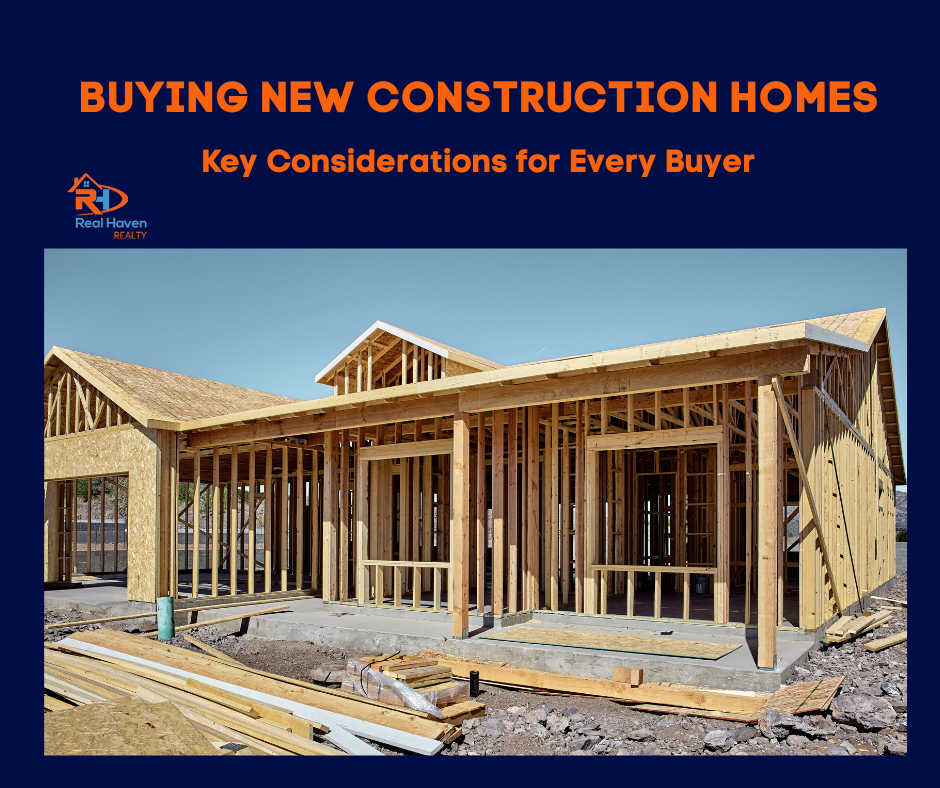
Buying a New Construction Home in Houston or Austin, Texas: What You Need to Know

Buying a New Construction Home in Houston or Austin, Texas: What You Need to Know Buying a new construction home should feel exciting, not overwhelming. Whether you’re searching in Houston or Austin, the team at Real Haven Realty helps our clients navigate the process with confidence, clarity, and a strategy that protects their best interests from the very beginning. New construction gives buyers the opportunity to start fresh with a home that feels modern, refined, and tailored to the way they live today. From sleek finishes to energy-efficient features and thoughtfully designed floor plans, it’s an appealing option for many buyers in today’s market.  Why Buyers Love New Construction One of the biggest advantages of new construction is the sense of possibility. Instead of adjusting to someone else’s choices, you get the chance to choose a home that fits your style, your needs, and your timeline. Many new homes also come with lower near-term maintenance, builder warranties, and the appeal of modern construction standards. In markets like Houston and Austin, where buyers often want both style and functionality, new construction can be a smart way to get both.  New Construction vs. Existing Homes When buyers are deciding between new construction and an existing home, the best choice usually comes down to lifestyle and priorities. An existing home may offer an established neighborhood, mature landscaping, and more immediate availability. A new construction home, on the other hand, typically offers newer systems, contemporary layouts, and the chance to enjoy a home that has never been lived in before. If you want a home that feels current, efficient, and low-maintenance from day one, new construction may be the right fit. If you prefer the charm of an established area or need to move quickly, an existing home may be worth exploring as well. Spec Homes vs. Custom Homes Not all new construction homes are created equal. Spec Home A spec home is built by the builder without a specific buyer directing the design. These homes are often move-in ready or close to completion, making them a great option for buyers who want convenience and a faster closing timeline.  Custom Home A custom home offers a more personalized experience. Buyers may have more input on layout, finishes, and design choices, creating a home that reflects a more individual vision. This option is ideal for buyers who want a more tailored experience and are comfortable with a longer build process.  Things to Consider Before You Buy New construction can be beautiful, but it’s important to understand the full picture before moving forward. Builder upgrades, lot premiums, and design selections can significantly affect the final price. Timelines can also shift depending on construction progress, supply availability, and weather. And because many new homes are sold before they are completed, it can sometimes be difficult to fully picture the final result.  That’s why it helps to have someone guiding you through the process who understands both the market and the details. Feature New Construction Existing Home Maintenance Lower Varies Customization High Limited Move-in Speed May take months Usually faster Mature Landscaping Rare Common Energy Efficiency Higher  Varies Negotiation Opportunities Incentives often available Price and Repairs Additional FAQs  Do I Need a Realtor When Buying New Construction? Many buyers assume the builder's sales representative works for them. In reality, the builder representative works for the builder. A buyer's agent helps you compare builders, understand contracts, negotiate incentives, and protect your interests. Can You Negotiate on a New Construction Home? Yes. Builders may be more willing to negotiate on: Closing costs  Interest rate buy-downs Design upgrades Lot premiums Appliance packages What Are the Hidden Costs of New Construction? Buyers should budget for: Lot premiums Design center upgrades Blinds and window treatments Landscaping Fencing Appliances Property taxes and HOA fees Should I Get a Home Inspection on a Brand-New Home? Absolutely. Even new homes can have issues and should be inspected. Many buyers choose: Pre-drywall inspection Final inspection Builder warranty inspection before the one-year warranty expires Buying New Construction in Texas: What Makes It Different? Higher property taxes - Texas is a no income tax state so property taxes tend to be higher MUD taxes - newer communities have this additional tax for water and sewer infastructure PID assessments - These are special taxing districts in cities for additional public works. HOA communities - Community boards that oversee common areas and deed restrictions Rapidly growing suburbs - both Houston and Austin are seeing large amounts of suburban growth Energy efficiency standards - Texas weather means it is important to have high energy efficiency appliances and homes.  Insurance considerations- Insurance costs have been rising due to hurricanes, flooding, fires and freezes.  Why Work With Real Haven Realty When you walk into a builder’s sales office, you are dealing with the builder’s team. Our job is to represent you.  We help our clients compare builders, evaluate communities, review contracts, and understand what is included versus what costs extra. We also help buyers think through builder incentives, preferred lenders, upgrades, inspections, and closing details so they can make well-informed decisions at every step. In a competitive market like Houston or Austin, that kind of representation matters. You deserve someone who is looking out for your goals, your investment, and your long-term peace of mind. Thinking About Buying New Construction in Houston or Austin? Our team helps buyers:  Compare builders and communities  Understand contracts and incentives  Evaluate upgrades and lot premiums  Coordinate inspections  Avoid costly mistakes Reach out today to start your new construction search in Houston or Austin.   
Read More

House Hacking in 2026: What the Hype Got Wrong — and What Actually Works

House Hacking in 2026: What the Hype Got Wrong — and What Actually Works   If you’ve spent any time on real estate TikTok in the last few years, you’ve probably seen the house hacking pitch. Buy a property, rent part of it out, let your tenants cover the mortgage. Live for free. Build wealth while you sleep. It sounds like the kind of thing that works great in a YouTube thumbnail and falls apart in real life. And honestly? Sometimes it does. But here’s what those videos usually get right even when they oversell the outcome: housing costs have outpaced wage growth by a wide margin, and for the right buyer, generating income from a property can make ownership viable when it otherwise wouldn’t be. The strategy is real. The “living for free” part is just the clickbait version of it. In 2026, the smarter question isn’t whether house hacking works — it’s whether it’s the right fit for you, your market, and your numbers. Here’s what that actually looks like: What House Hacking Actually Means House hacking is straightforward in concept: buy a primary residence and generate income from it to help offset the cost of owning it. The definition is that simple. The execution has a lot of range. The term got a lot of breathless social media attention a few years ago—often paired with promises of “living for free” or “having your tenants pay your mortgage.” That framing wasn’t entirely wrong, but it oversimplified things in ways that set some buyers up for disappointment. In 2026, the more useful way to think about house hacking isn’t about eliminating a housing payment. It’s about engineering a more manageable one. If a rental unit on a property generates $1,600 a month and the mortgage is $3,800, that $2,200 net payment might be very achievable where $3,800 wasn’t. That’s the real value—not a free house, but a door that was otherwise closed, now open.   The Most Common Ways Buyers Are Doing It The ADU Boom Accessory Dwelling Units — often called ADUs, casitas, in-law suites, or backyard cottages — have become the gold standard of modern house hacking. An ADU is a secondary living unit on the same lot as a primary home. It might be a detached structure in the backyard, a converted garage, or a basement with its own entrance. ADUs have exploded in popularity for a simple reason: they’re increasingly legal in places where they weren’t before, and both the financing and the rental markets now support them. Fannie Mae made a significant policy update that took full effect in March 2026, allowing buyers to count projected ADU rental income toward their qualifying income when applying for a mortgage.¹ Specifically, lenders can now include ADU rental income on one-unit, owner-occupied purchase transactions, up to 30% of the borrower’s total qualifying income.¹ That’s a meaningful change. It means a buyer looking at a home with an ADU can leverage that unit’s income potential before they ever sign a lease with a tenant. Multi-Generational Living House hacking isn’t always about renting to strangers. For a growing share of buyers, it means sharing a home — and the costs that come with it — with family. Multi-generational home buying is sizable part of the market, with 14% of all home purchases nationally being multi-generational in the last year.² Gen X buyers led the charge, with 19% choosing multi-generational homes, and it’s not hard to understand why.² That generation is often caught supporting both aging parents and adult children at the same time, and a home designed to accommodate multiple adults under one roof can solve several problems at once: caretaking, privacy, and cost. Among multi-generational buyers, 41% said the primary reason for their purchase was to care for or support aging parents — the highest share since tracking began in 2015.³ Another 23% said their main motivation was simply to spend more time with their parents.³ This isn’t niche behavior. It reflects a real demographic and economic reality that’s reshaping how families think about homeownership. The Classic Multi-Family Buying a duplex, triplex, or small multi-family property and living in one unit while renting the others is the original form of house hacking — and it still works. FHA loans allow buyers to purchase properties with up to four units with as little as 3.5% down, as long as the buyer occupies one unit as their primary residence. Eligible veterans can go even further with a VA loan, which requires no down payment at all on qualifying multi-unit properties. And for buyers who don’t fit either of those boxes, Freddie Mac’s Home Possible program allows qualified buyers to put as little as 3% down.   The financing options for owner-occupied multi-family are genuinely more accessible than most buyers realize. For those willing to share a property line with their tenants, the income potential is typically higher than an ADU, and the strategy is time-tested.4 The Real Math Here’s the truth about house hacking in 2026: the “living for free” narrative that circulated on social media was never universally achievable, and it’s even rarer now. Interest rates have stabilized but remain elevated compared to the pandemic-era floor. Home prices, while not climbing at the same frenetic pace, are not meaningfully lower in most markets. Cash-flowing a property from day one — generating enough rental income to cover the entire mortgage — requires either very favorable market conditions or a large down payment. That’s not a reason to dismiss the strategy. It’s a reason to recalibrate expectations. The goal in 2026 isn’t to eliminate a housing payment. It’s to reduce it to something sustainable. In many cases, a well-chosen house hack turns an unaffordable property into a manageable one — and that’s a significant win. Buyers who run realistic numbers, factor in vacancy periods and maintenance costs, and approach the strategy with patience tend to do well. Buyers who chase optimistic projections tend to struggle. Lenders have adjusted, too. The new Fannie Mae ADU income guidelines come with documentation requirements and a cap on how much of that income can be counted.¹ This is a reasonable safeguard, not a barrier — it filters out the wishful math and keeps the qualifying process grounded in real market data. Who This Works Best For First-time buyers facing an affordability gap. If income doesn’t support the mortgage on a home that checks all the boxes, a property with rental potential can bridge that gap — both by reducing the net monthly payment and, in the case of ADU-eligible properties, by improving what a lender will approve in the first place. The sandwich generation. Gen X buyers, who are often supporting aging parents while still raising or housing adult children, have more motivation than any other group to maximize what a home does for them.² A property designed for multi-generational living isn’t just a financial strategy; it’s a practical solution to a real caregiving reality. NAR research shows that among Gen X multi-generational buyers, households with three or more income earners are increasingly common, which further strengthens the financial case.³ Future investors learning the ropes. Living in a property while managing a rental unit is one of the best ways to learn real estate investing without the full risk exposure of a standalone investment property. A buyer who spends two or three years in a house hack and then moves to their next home can keep the first property as a full-time rental — with tenant management experience already under their belt. What to Know Before Getting Started Zoning and local regulations are non-negotiable. ADU legality, short-term rental rules, and multi-family zoning vary dramatically by city and neighborhood. What’s allowed three blocks away may not be allowed on the property being considered. Unpermitted units create liability headaches that outlast the savings they generate. Doing things by the book from the start isn’t just the right approach — it’s the only one that holds up over time. Run conservative numbers. Plan for vacancies. Budget for maintenance. Use realistic rent estimates based on comparable properties in the area, not best-case scenarios. If the math still makes sense when accounting for a month or two of vacancy each year plus routine repairs, it’s a solid plan. If it only works at 100% occupancy with top-of-market rents, it’s a risk. Be honest about lifestyle fit. Sharing a property with tenants — whether strangers renting an ADU or family members in a multi-generational setup — comes with real tradeoffs. It requires a certain temperament and a willingness to handle the occasional uncomfortable conversation. Buyers who go in with clear boundaries and realistic expectations tend to thrive. Those who underestimate the interpersonal dimension often don’t. The Bottom Line House hacking is no longer a fringe idea for real estate investors. It’s a mainstream strategy that serious buyers in 2026 are using to navigate a market that doesn’t hand out easy answers. The fundamentals of homeownership — building equity, gaining stability, and creating long-term wealth — still hold. House hacking simply acknowledges that the path to those benefits sometimes requires a little more creativity with how a property is used. Every neighborhood is different. Zoning rules, rental demand, and property potential vary widely, and the right house hack for one buyer might look completely different for another. If you’re wondering whether you’re the right fit for this strategy, that’s exactly the conversation worth having. Reach out and let’s dig into what it could actually look like for your market and your numbers. Sources: Fannie Mae / Pennymac Announcement 26-25: https://corr.pennymac.com/non-delegated-announcements/announcement-26-25 NAR 2026 Home Buyers and Sellers Generational Trends Report: https://www.nar.realtor/research-and-statistics/research-reports/home-buyer-and-seller-generational-trends NAR Economists’ Outlook – Multi-Generational Homes: https://www.nar.realtor/blogs/economists-outlook/making-extra-room-at-the-table-multi-generational-trends Redfin – House Hacking: What Is It, and Why Is It So Popular?: https://www.redfin.com/blog/house-hacking/
Read More

What Can be Negotiated When Buying a Home?

What You Can Negotiate in a Home Purchase  (That Most Buyers Don’t Realize) When most people picture negotiating on a home, they picture one number: the list price. You offer somewhere under the asking price, the seller counters, you settle in the middle, and whoever gives up the most ground “loses.” For a lot of buyers, that back-and-forth over the sale price is the negotiation. It’s only a fraction of it. The price is the headline. The real negotiation happens in the terms underneath it, and right now those terms are where the money is. Buyers have more room to ask than they’ve had in years. The market has tilted in their favor, and it’s showing up at the closing table: in 2025, 62.2% of buyers paid below the list price, and the typical below-list buyer saved 7.9% — about $31,592 — the biggest discount in over a decade.¹ So here’s what actually separates the buyers who come out ahead. It isn’t the ones who push hardest on the price. It’s the ones who understand everything that’s on the table, and know which things are worth asking for. The Price-Only Trap It’s easy to assume a seller cares about one thing: the highest possible number. In practice, most care about more than that. They care about certainty, meaning whether the deal will actually close. They care about timing. They care about whether your financing will hold together or fall apart three weeks in. That matters for you, because it means you have more to work with than a single figure. A buyer who treats the offer as a package — price, terms, timing, and risk all together — can often create a better outcome than a buyer who just hammers on price and calls it a day. That’s why a clean, well-structured offer can beat a higher one: to the right seller, the certainty is worth more than the extra dollars. So before you anchor on a number, widen the lens. Here’s what else is on the table. The Money Levers Beyond the Price Some of the most valuable things you can ask for never touch the sale price at all. They change what you actually pay out of pocket. Start with a seller concession. This is money the seller agrees to credit you at closing, most often to cover part of your closing costs, which typically run 2% to 5% of the purchase price.² Rather than cutting the sale price, the seller puts cash toward those costs, lowering what you need to bring on closing day. It’s worth asking for any time your upfront cash is the tightest constraint, which for a lot of buyers it is. And it’s far from a long shot right now: about 44% of sellers recently gave buyers a concession of some kind, close to the highest share on record.³ A rate buydown is one of the least understood levers, and one of the most valuable. When you buy down the rate, someone pays the lender an upfront sum in exchange for a lower mortgage interest rate. In a negotiation, you ask the seller to be the one who pays it. A buydown can be permanent, lowering your rate for the life of the loan, or temporary. A common version, the “2-1 buydown,” cuts two percentage points off your rate the first year and one point the second, then settles at the full rate. Builders have leaned on this hard: 64% were offering incentives like buydowns and closing-cost help earlier this year.4 It’s worth understanding why this can beat a price cut outright. Take $10,000 off the sale price and your monthly payment barely moves, maybe a few dollars on a 30-year loan. Put that same $10,000 toward buying down your rate, and you feel it in every payment for as long as you own the home. It’s the same money out of the seller’s pocket, but a far bigger result in yours. The Inspection Is Your Second Negotiation Most buyers treat the home inspection as a hurdle to clear: pass it, and you move on. It’s better understood as a second negotiation, and the leverage is usually built in, because an inspection on almost any home turns up something worth addressing. When it does, you generally have two options. You can ask the seller to make the repairs before closing, or ask for a credit instead so you can handle the work yourself afterward. The credit is often the cleaner win. You control the contractor, the timeline, and the quality of the work, instead of depending on a seller’s rushed, last-minute fix. A few rules of thumb. Focus on what genuinely matters, meaning health, safety, and the big-ticket systems like the roof, HVAC, or foundation, rather than nickel-and-diming every cosmetic flaw. Consider asking for a home warranty to cover the things that tend to break after you move in. And treat the report as a planning tool, not just a bargaining chip. A fifteen-year-old water heater isn’t a reason to walk away. It’s a heads-up that helps you budget. Terms and Timeline: The Wins That Aren’t About Money One of the most powerful levers costs you nothing: flexibility. To a seller, time is often worth as much as dollars. Say the sellers need a few extra weeks in the home because their next place isn’t ready. Offering a rent-back, which lets them stay on for a short period after closing, can make your offer the one they choose even over a higher bid. Or maybe they need to close fast, and you’re in a position to deliver. The closing date, the possession date, the length of your contingency periods, even how your earnest money is structured: all of it is something you can shape. The strategic move is simple. Give the seller the timeline they need, and you’ll often get the terms you want in return. What Actually Comes With the House This is the simplest ask of all, and the one buyers most often forget to make: what physically stays with the house. Appliances, window treatments, the mounted TVs, the washer and dryer, sometimes even furniture or the patio set you admired during the showing. A lot of it is negotiable. The law draws a line between fixtures, which are generally included, and personal property, which generally isn’t, and that line is exactly where a quick ask can pay off. One rule matters above the rest: get every extra written into the contract. A friendly “sure, we’ll leave the fridge” during a showing means nothing if it isn’t on paper. And if there’s something you want, ask for it. The worst answer you’ll get is no. How to Actually Use the Whole Menu Knowing what’s negotiable is the easy part. Using it well is what turns a list of asks into a better deal. The buyers who succeed don’t fire off every possible demand at once. They lead with what the seller values most, group their requests thoughtfully, and avoid the death-by-a-thousand-cuts approach that makes a seller dig in. Above all, they read the seller’s real motivation, and that’s where a skilled agent earns their keep. It’s no accident that 88% of buyers work with an agent, and that the help they value most is negotiating the terms of the deal.5 A calm, well-prepared buyer with a clear strategy almost always does better than an aggressive one throwing elbows. The goal isn’t to beat the seller. It’s to structure a deal that works for both sides, and to make sure you’re not leaving value on the table you never knew was there. If you’re getting ready to buy, this is exactly the kind of thing worth talking through before you write an offer. I’m glad to walk through everything you could be asking for in your particular situation. No pressure, just a clear picture so you can make a confident decision. Sources Redfin —Homebuyers Are Scoring the Biggest Discounts in 13 Years Redfin —What Are Closing Costs and How Much Will You Pay? Redfin —44% of Home Sellers Are Giving Concessions to Buyers NAHB / WTOP —Builder Incentives and Rate Buydowns NAR —2025 Profile of Home Buyers and Sellers For more information about buying a home Check Out: What is a Buyer Home Inspection or Buying a New Construction Home July 15, 2026 About the author: Ronda Doxey is the Broker/Owner of Real Haven Realty and has helped buyers and sellers throughout Houston and Austin navigate changing market conditions. Her background as both an investor and broker gives clients practical guidance on pricing, negotiations, and maximizing home value.  
Read More

Search Property Listings