Real Haven Realty
Spring Into Action: Your Texas Yard is Calling
Spring in Texas is a race against the clock. By May, Austin and Houston homeowners are already bracing for triple-digit heat, so the window to plant, fertilize, prune, and polish your home's exterior is right now — February through April. Whether you're in the Austin Hill Country, a South Austin bungalow neighborhood, the Houston Heights, or Sugar Land, this newsletter is written for your climate, your soils, and your yard. Because what works in the Pacific Northwest or the Midwest simply doesn't apply here.
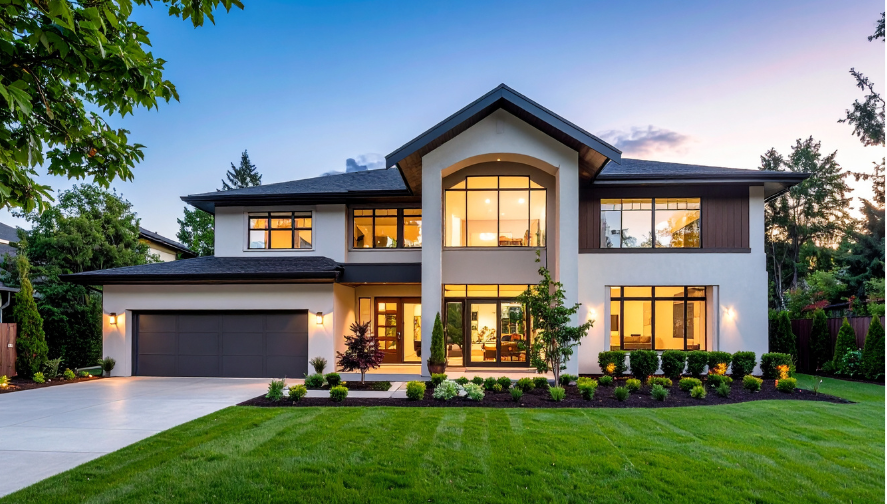
Why Curb Appeal Matters in Austin & Houston Markets
Both Austin and Houston are among the most dynamic real estate markets in the United States. A well-maintained exterior isn't just a point of pride — it's a financial asset with measurable returns.
According to the National Association of Realtors, landscape improvements can yield a return on investment of 100–200% at resale, and homes with strong curb appeal sell for an average of 7% more than comparable properties with neglected exteriors (NAR Remodeling Impact Report, 2023). The American Society of Landscape Architects estimates that quality landscaping can add 15–20% to overall home value and reduce time on market by up to 6 weeks (ASLA, 2022).
| Austin Market Note: Austin's competitive resale market means buyers often make snap judgments before touring. A lush, healthy lawn and clean landscaping signals a well-maintained home — and can be the difference between a showing and a pass in high-inventory neighborhoods. |
| Houston Market Note: In Houston's sprawling market, curb appeal carries extra weight in suburbs like Katy, The Woodlands, Sugar Land, and Pearland, where buyers compare many similar homes at similar price points. Landscaping is frequently cited as a top factor in buyer first impressions. |
Two Cities, Two Climates — Know Your Yard
While Austin and Houston are both in Texas, they have meaningfully different growing conditions. Understanding your local climate is the first step to a yard that thrives.
Austin
Austin sits at the edge of the Edwards Plateau and Blackland Prairie, with USDA Hardiness Zone 8b. The soils are predominantly thin, rocky limestone-based in the Hill Country neighborhoods, or expansive Blackland clay east of I-35. Austin's last average frost date is mid-February to early March, so spring prep begins in earnest in February. The region also sits in the heart of oak wilt country — one of the most important considerations for any Austin homeowner with live oaks on the property.
Houston
Houston sits on the Gulf Coastal Plain in Zone 9a, with heavy, poorly-draining clay soils (Beaumont and Houston clay series) and high annual rainfall averaging 50+ inches per year. The last frost date in Houston is typically mid-January to early February, meaning spring arrives earlier. The primary challenges here are drainage, fungal disease, humidity-driven pests, and the need for plants that can handle both waterlogging and summer drought. Houston's humidity also means mold, mildew, and algae on hard surfaces are ongoing maintenance concerns.
| Timing Summary: Austin: Begin spring prep February–March. Houston: Begin late January–February. Both cities: Summer heat stress arrives by May — beat it. |
Lawn Care: Warm-Season Grasses for Texas Summers
Central Texas lawns are dominated by warm-season grasses that thrive in heat and go dormant over winter. The species you have — and the soil you're working with — determines your spring approach.
Austin Lawns
St. Augustine (especially Raleigh and Palmetto varieties) is the most common lawn grass in Austin, particularly in shaded yards. Bermuda and Zoysia are popular in full-sun settings. Texas A&M AgriLife Extension recommends waiting until your lawn is at least 50% green before fertilizing in spring to avoid stimulating growth vulnerable to a late frost (Texas A&M AgriLife, 2023).
- Scalp Bermuda and Zoysia to 1 inch in late February to remove dormant thatch and allow soil warming.
- Do not scalp St. Augustine — mow at normal height (3.5–4 inches) to protect stolons.
- Apply a pre-emergent herbicide in February when soil temperatures reach 50–55°F to prevent crabgrass and sandbur.
- Fertilize in March–April with a slow-release 3-1-2 ratio fertilizer once 50% green-up is confirmed.
- Core aerate Blackland clay soils (east Austin) in spring and topdress with compost to improve drainage.
Houston Lawns
St. Augustine — particularly the Floratam variety — dominates Houston lawns due to its shade tolerance and humidity resistance. Houston's heavy clay soils and flooding risk create unique challenges for turf health.
- Dethatch St. Augustine in late February if the thatch layer exceeds half an inch, which is common in Houston's humid conditions.
- Apply a pre-emergent in late January to February — Houston's earlier spring means earlier weed pressure.
- Fertilize with a slow-release nitrogen fertilizer in March, after new growth begins. Avoid over-fertilizing, which promotes brown patch disease in humid conditions.
- Address drainage issues now: low spots that pool water stress turf roots and create ideal conditions for fungal disease. Consider French drains or regrading problem areas.
- Watch for Take-All Root Rot and Brown Patch — two of Houston's most common St. Augustine diseases, both favored by wet spring conditions (Texas A&M AgriLife, 2023).
| Houston Fungal Alert: Brown Patch fungus is extremely active in Houston's spring humidity. Avoid evening watering, reduce nitrogen applications in wet periods, and treat with a labeled fungicide at first signs of circular brown patches in your lawn. |
Water-Smart Landscaping
Choosing regionally appropriate plants is the single most impactful thing you can do for a beautiful, low-maintenance yard in either city. The Lady Bird Johnson Wildflower Center maintains the most comprehensive database of Texas-appropriate native and adapted plants (Wildflower Center, 2023).
Top Picks for Austin
- Texas Sage (Leucophyllum frutescens): Drought-tolerant silver-leaf shrub that explodes into purple bloom after rains. Thrives in Austin's rocky limestone soils.
- Autumn Sage (Salvia greggii): Prolific bloomer in red, pink, or coral. Beloved by hummingbirds and butterflies; extremely heat and drought tolerant.
- Esperanza / Yellow Bells (Tecoma stans): Bold yellow trumpets from spring through frost. Thrives in Austin's full sun and alkaline soil.
- Turk's Cap (Malvaviscus arboreus): Shade-tolerant native with unique red blooms; ideal for the dry shade under live oaks — a notoriously difficult planting condition.
- Agave and Yucca: Architectural statement plants that need virtually no water once established and provide year-round structure.
- Inland Sea Oats (Chasmanthium latifolium): A graceful native grass for shaded areas under trees; low maintenance and deer resistant.
Top Picks for Houston
- Gulf Muhly Grass (Muhlenbergia capillaris): Spectacular pink-purple plumes in fall; tolerates Houston's wet-dry cycle and adds dramatic texture.
- Firebush (Hamelia patens): Fast-growing shrub with tubular orange-red flowers beloved by hummingbirds; thrives in Houston's heat and humidity.
- Cast Iron Plant (Aspidistra elatior): Lives up to its name — tolerates deep shade, Houston's clay soils, flooding, and drought.
- Louisiana Iris: Bred for the Gulf South's conditions, these stunning irises thrive in Houston's wet springs and clay soils.
- Confederate Rose (Hibiscus mutabilis): A Houston classic — blooms transform from white to deep pink in a single day; loves humidity.
- Dwarf Yaupon Holly (Ilex vomitoria 'Nana'): Hardy, dense evergreen shrub native to the Gulf Coast; tolerates wet soils, drought, and clay.
| Pro Tip: Avoid Bradford Pear trees in both cities — they are structurally weak, invasive, and have been designated a 'Least Wanted' plant by Texas nursery associations. Native alternatives like Mexican Plum and Eve's Necklace offer beautiful spring blooms without the problems. |
Tree & Shrub Care
Austin: Live Oak & Oak Wilt Awareness
Austin sits in the heart of Texas's oak wilt zone — a devastating fungal disease that has killed hundreds of thousands of live oaks across the Hill Country and Central Texas. The Texas A&M Forest Service identifies oak wilt as the most destructive tree disease in the state (Texas A&M Forest Service, 2023).
- Do NOT prune live oaks between February 1 and June 30. Sap beetles that transmit the fungus are most active during this period.
- If you must prune or if a branch breaks during this period, immediately seal all wounds with wound paint or latex paint — do not leave cuts exposed.
- Remove and destroy any firewood from red oaks that show signs of oak wilt — do not move it to other parts of the property.
- If you suspect oak wilt (veinal necrosis on leaves, rapid defoliation), contact a certified arborist immediately. The disease spreads through root grafts between neighboring trees.
Houston: Storm Prep & Structural Pruning
Houston's vulnerability to tropical storms, hurricanes, and severe thunderstorms makes structural tree pruning a safety necessity, not just an aesthetic one. The aftermath of storms like Harvey demonstrated how poorly-maintained trees become major hazards.
- Prune for structure in late winter/early spring before new growth — remove crossing branches, co-dominant leaders, and dead wood.
- Hire a certified arborist (ISA-certified) for any tree work near the home or power lines. The International Society of Arboriculture maintains a searchable database of certified professionals (ISA, 2023).
- Do not top trees — it creates weak, fast-growing regrowth that is especially vulnerable to wind damage in storm conditions.
- Consider proactive root zone treatment for mature trees in flood-prone areas, where root compaction and anaerobic soil conditions shorten tree lifespan.
Exterior Home Maintenance for Curb Appeal
A polished yard is only part of the first impression. The home's exterior — paint, trim, driveway, entry, and fencing — completes the picture.
Both Cities
- Power wash driveways, sidewalks, and patios: Houston's humidity means algae and mildew accumulate quickly; Austin's pollen season coats every surface in green dust by March.
- Repaint or refinish the front door: Zillow research found that a bold front door color (black, charcoal, deep navy) can add up to $6,271 to sale price (Zillow, 2022). This is consistently one of the highest ROI exterior improvements available.
- Clean gutters: Critical in both cities — in Houston for managing the heavy rainfall, in Austin for protecting the foundation from the rare but intense rain events that saturate our clay soils.
- Inspect and re-caulk around windows, doors, and trim: Texas heat causes expansion and contraction that degrades caulk and weatherstripping annually.
- Touch up exterior paint on trim and shutters: Intense UV exposure in Texas fades and chalks exterior paint faster than in most U.S. regions.
Austin Specific
- Seal cracks in limestone or concrete walkways and retaining walls before summer heat widens them further.
- Check cedar fencing: Austin's dry heat and UV exposure cause cedar to silver and split; restaining every 2–3 years maintains both appearance and longevity.
- Remove any standing water features that are not circulating — Austin is in an Aedes aegypti mosquito zone and stagnant water breeds mosquitoes rapidly by April.
Houston Specific
- Inspect the foundation: Houston's expansive clay soils shift significantly with wet and dry cycles. Spring is a good time to check for new cracks around doors, windows, and the slab perimeter. \
- Check for mold and mildew on exterior walls, fencing, and under eaves — Houston's humidity makes these surfaces highly susceptible. Treat with a diluted bleach solution and rinse thoroughly.
- Ensure proper grading away from the home: Water that pools against the foundation is a leading cause of structural damage in Houston's wet climate.
The Numbers: What a Great Yard Is Worth
- NAR's Remodeling Impact Report: Standard lawn care service recovers approximately 539% of its cost at resale (NAR, 2023).
- Homes with high-quality landscaping sell for 10–15% more than comparable properties with neglected yards (Virginia Tech, 2018).
- Adding shade trees reduces home cooling costs by 10–25% — meaningful in cities where summer electricity bills routinely top $300–$400/month (U.S. DOE, 2022).
- In the Journal of Real Estate Finance and Economics, researchers found curb appeal accounts for an average 7% price premium across U.S. housing markets (2021).
- A front door repaint — one of the cheapest and fastest curb appeal upgrades — can yield a return of 6,000%+ based on cost vs. appraised value increase (Zillow, 2022).
Your Spring Checklist: Austin & Houston
Lawn & Garden
- Apply pre-emergent herbicide (Jan–Feb in Houston; Feb in Austin)
- Scalp Bermuda/Zoysia lawns; do not scalp St. Augustine • Fertilize after 50% green-up with slow-release fertilizer
- Dethatch St. Augustine if thatch exceeds 1/2 inch (Houston)
- Aerate and topdress clay soils with compost
- Edge and mulch all garden beds (3–4 inches deep)
- Plant cool-season annuals now; transition to heat-tolerant varieties by April
- Replace struggling plants with regionally native or adapted species
Trees & Irrigation
- DO NOT prune live oaks Feb–June (Austin oak wilt risk)
- Prune dead, crossing, and structurally weak branches (Feb)
- Inspect and repair irrigation system; add rain sensor if not present
- Add or adjust drip irrigation for landscape beds
- Check drainage and redirect downspouts away from foundation
Exterior & Hardscape
- Power wash driveways, patios, sidewalks, and exterior walls
- Clean gutters and flush downspouts
- Repaint or refinish front door
- Touch up exterior paint on trim and shutters
- Inspect and re-caulk around all windows and doors
- Inspect foundation for new cracks (Houston especially)
- Repair fence, seal cracks in walkways and retaining walls
Final Thoughts
Austin and Houston homeowners share a common challenge: a brutal summer that rewards early preparation and punishes procrastination. The yards and homes that look best in July and August are the ones whose owners showed up in February and March — fertilizing, planting, pruning, and refreshing before the heat arrived.
A beautiful, well-maintained exterior increases your home's value, reduces long-term maintenance costs, and gives you something to enjoy every single day. Whether you're in Travis Heights or The Woodlands, Tarrytown or Memorial, spring is your moment. Take it.
Happy Growing, Austin and Houston!
Sources and References:
National Association of Realtors (NAR). (2023). Remodeling Impact Report: Outdoor Features. https://www.nar.realtor/research-and-statistics
American Society of Landscape Architects (ASLA). (2022). Residential Landscape Architecture Trends Survey.
Texas A&M AgriLife Extension. (2023). Lawn Care in Texas: Warm-Season Grasses. https://agrilife.org
Texas A&M Forest Service. (2023). Oak Wilt in Texas: What Homeowners Need to Know. https://tfsweb.tamu.edu
Lady Bird Johnson Wildflower Center. (2023). Native Plant Database — Central and East Texas. https://www.wildflower.org/plants
U.S. Environmental Protection Agency (EPA). (2023). WaterSense: Outdoor Water Use. https://www.epa.gov/watersense
Zillow. (2022). Paint Color Analysis: Which Exterior Colors Help Homes Sell For More. https://www.zillow.com/research
Virginia Tech College of Agriculture and Life Sciences. (2018). The Economic Value of Residential Landscaping.
International Society of Arboriculture (ISA). (2023). Find a Certified Arborist. https://www.treesaregood.org
OUR LISTINGS

© 2026 Real Haven Realty
DMCA Notice | Terms & Services | Privacy Policy | Accessibility Statement
EQUAL HOUSING OPPORTUNITY



Real Haven Realty
821 W New Hope Dr, 102, Cedar Park, TX 78613
Office: 281-858-3654
real.haven@realhaven.com